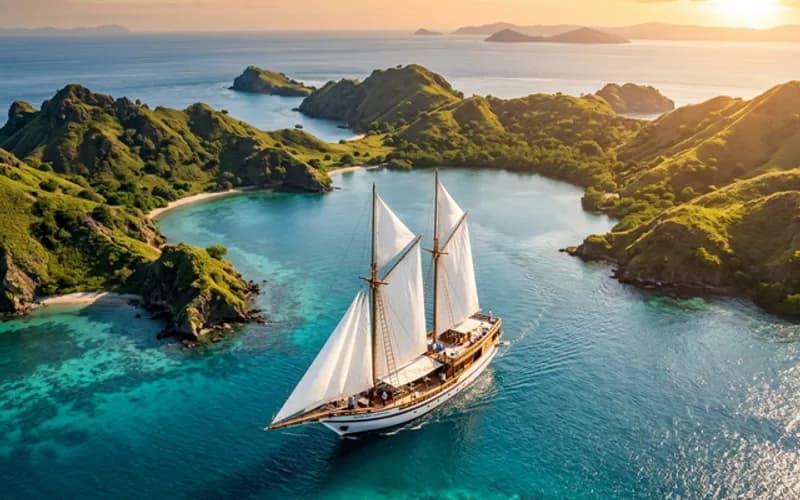
Komodo Island is home to the world's largest living lizard, the Komodo dragon. This comprehensive guide covers everything you need to know for your trip — from how the trek actually works to when to go, how to get there, and what separates Komodo from its neighboring islands inside the national park.
Most first-time visitors picture a single island with dragons wandering everywhere. The reality is a bit more layered: Komodo National Park spans several islands, each with a different dragon population, a different landscape, and a different reason to visit. Getting that straight before you book saves a lot of confusion later.
Wild Population
~5,700 dragons, park-wide
Nearest Airport
Labuan Bajo (LBJ)
Boat to Park
1-2.5 hrs from Labuan Bajo
Best Months
April - December
Meet the Komodo Dragon
The Komodo dragon (Varanus komodoensis) is the largest living lizard on the planet, and by a wide margin. Adult males regularly reach 2.5 to 3 meters in length and can weigh well over 70 kilograms, with powerful legs, a heavy tail used for balance and defense, and a forked yellow tongue that constantly tastes the air for scent. They are, in the most literal sense, a living link to a much older world — apex predators that have had these islands almost entirely to themselves for a very long time.
What makes the dragon genuinely dangerous is its bite. For years the popular explanation was "toxic bacteria," but research over the last couple of decades has confirmed that Komodo dragons produce venom from glands in the lower jaw. The venom contains compounds that prevent blood clotting and drop blood pressure in prey, working alongside the bite's serrated, shark-like teeth to weaken large animals — including wild pigs, deer, and even water buffalo — until they succumb, sometimes over hours or days as the dragon patiently follows the scent trail. Dragons are also fast over short distances, can swim between islands, and are capable of climbing when young. None of this is meant to alarm you; it's exactly why the park's ranger system exists, and why it works.
Where Dragons Actually Live
Wild Komodo dragons are found only in a handful of places on Earth, and nearly all of them sit inside Komodo National Park in eastern Indonesia. The two islands travelers actually visit are Komodo Island itself and Rinca Island, along with a smaller population on Gili Motang and dragons on the adjacent mainland of Flores in the West Manggarai area. Komodo Island tends to have a more rugged, savanna-and-forest landscape with dragons that keep more space from the ranger posts, while Rinca is smaller, drier, and often delivers closer, more reliable sightings right around the village and ranger station — which is why many operators treat Rinca as the more dependable dragon-spotting stop and Komodo as the more scenic, complete-island experience.
The Ranger-Guided Trekking System
You cannot walk into Komodo National Park and wander off on your own — every visitor treks in a small group with an armed park ranger, and this is non-negotiable, for good reason. Rangers read dragon behavior for a living: they know where the animals tend to rest, how to keep a safe distance, and how to redirect a group calmly if a dragon moves toward the trail. They carry a long forked stick, used historically to fend off an approaching dragon, and they know the terrain well enough to adjust the route on the spot. Trekking without one isn't offered as an option anywhere in the park, and that's the point — it's what keeps the safety record for visitors as strong as it is.
Most ranger posts offer a choice of trek lengths. A short trek generally stays close to the ranger station and covers flatter ground, taking somewhere around 30 to 60 minutes — a reasonable option for travelers with limited mobility, young kids, or those short on time. A medium or long trek pushes further into the island's interior, often climbing a ridge or hilltop for a panoramic view over the bay and surrounding islands, and can run anywhere from 1.5 to 3 hours depending on the route and group pace. Longer treks generally mean fewer other visitors, more varied scenery — dry savanna, patches of forest, coastal viewpoints — and a better chance of spotting other wildlife such as Timor deer, wild boar, and various birds, alongside the dragons themselves.
Best Time to Visit
The best time to visit Komodo is during the dry season, which runs roughly from April to December. Within that stretch, the months of May through September tend to bring the driest, clearest conditions — blue skies, calm seas, and the savanna hills turning a distinctive gold-brown that photographs beautifully. This is also the most comfortable window for trekking, since the ground is firm and trails aren't slick, and it's the season when diving and snorkeling visibility around the park is typically at its best.
The wet season, roughly January through March, is quieter and greener — the hills flush with new growth, which has its own appeal — but it brings heavier rainfall, rougher seas on some days, and a higher chance of a boat trip being adjusted or delayed for safety. Trekking trails can turn muddy and slippery. It's not a season to avoid outright, and prices and crowds are often lower, but if your trip revolves around calm-water boat days and comfortable trekking, dry season is the safer bet.
Getting There
There's no road or bridge into Komodo National Park — the only way in is by air and then by sea. You'll fly into Labuan Bajo Airport (airport code LBJ) on the western tip of Flores, which has regular domestic connections from major Indonesian hubs. From Labuan Bajo, every visit to Komodo or Rinca Island happens by boat, since the park islands sit out in the Flores Sea and Sape Strait, off the coast of Flores itself.
Boat time varies by island and by which port or itinerary you're on. Rinca is the closer option, often reachable in under two hours from Labuan Bajo harbor, while Komodo Island itself typically takes longer — often in the range of two to two and a half hours each way, depending on the boat and sea conditions. Because of these transit times, single-day trips are common but tightly scheduled, and multi-day liveaboard trips are popular precisely because they let you cover Komodo, Rinca, Padar, and the surrounding snorkel sites without rushing any one of them.
The Park Entry System
Entering Komodo National Park involves a permit and conservation fee structure managed by the park authority, separate from whatever you pay your tour operator for the boat, guide, and logistics. In practice this usually breaks down into an entrance ticket, a ranger/guide fee tied to your trek, and sometimes small additional levies depending on which island and activity you're doing that day — trekking, photography, or entering specific zones. These fees go toward conservation and park management, and they can be adjusted by the authority from time to time, so it's worth confirming current details with your operator when you book rather than relying on older published numbers. A reputable local operator will handle the permit process for you as part of the package, which is one less thing to worry about on the day.
Komodo vs. Rinca vs. Padar: What's the Difference?
These three names get used almost interchangeably by first-time visitors, but they offer genuinely different experiences, and understanding the difference helps you plan a smarter itinerary.
- Komodo Island is the largest and most iconic of the three, with a bigger dragon population spread across varied terrain — savanna, forest, and coastline. Treks here can feel more expansive, and the island also has its own beautiful bays for a post-trek swim.
- Rinca Island is smaller and drier, with dragons frequently seen right around the ranger station and village, making sightings feel more consistent and requiring less walking. It's the practical choice for travelers who want a strong chance of close encounters without a long trek.
- Padar Island has no resident dragon population at all — it's on this list because it's almost always paired with a Komodo or Rinca visit. Padar's draw is its viewpoint: a short, steep climb to a ridge overlooking three distinct, differently colored bays, which is one of the most photographed panoramas in Indonesia.
What to Wear and Bring
Trekking gear here should prioritize coverage, grip, and sun protection over anything technical. Closed-toe hiking shoes or sturdy trail sandals with good tread are essential — the ground is often loose gravel, dry grass, or uneven rock, and there is little to no shade for most of the walk. Lightweight, breathable long sleeves and long pants protect against sun and thorny scrub. A wide-brimmed hat, high-SPF sunscreen, and a full water bottle are non-negotiable, since trails have no shops or refill points and the heat builds quickly once the sun is up. A small day bag for a camera, extra water, and reef-safe sunscreen (if you're combining the trek with snorkeling afterward) rounds things out. Bright, dragon-colored clothing isn't actually a concern — the more important habit is simply staying close to your group and ranger at all times.
Safety Around the Dragons
The core safety rule is simple: stay with your ranger, keep the distance they set, and never approach a dragon for a photo, no matter how still or sleepy it looks. Dragons that appear to be dozing in the shade can move suddenly and quickly over short distances, and rangers position groups specifically to avoid being in a dragon's direct path. Avoid wearing strong perfume or carrying food where a dragon might catch the scent, keep noise reasonably low, and don't dangle bags, cameras, or hands out toward an animal for a "closer" shot. Children should stay within arm's reach of an adult. In the rare event a ranger asks the group to stop, back away, or change route, follow immediately without debate — they're reading something in the dragon's behavior that isn't obvious to a visitor.
Combine your dragon trek with Padar and Pink Beach
Because Komodo, Rinca, Padar, and Pink Beach all sit within a similar stretch of the park, most boat itineraries combine two or three in a single day trip, or spread them across a multi-day liveaboard. A popular pairing is a morning Komodo or Rinca trek, followed by the Padar viewpoint climb for photos, then an afternoon swim and snorkel at Pink Beach — named for the way coral fragments tint the sand a soft rose color. Ask your operator how they sequence the day; starting the trek early avoids the harshest midday heat on the exposed trails.